

Limerick City and County Council has announced the successful completion of a pilot lease of a GHS Drive 1800 zero-grazing machine, which has demonstrated potential to enhance biodiversity management, support climate action objectives, and improve the efficiency of meadow and open space management across the county.
The machine was leased for a trial period and used to cut and collect vegetation from grasslands and pollinator-friendly meadows within the Limerick Decarbonisation Zone and beyond. The pilot forms part of the Council's ongoing commitment to implementing the Limerick Biodiversity Action Plan, the Climate Action Plan and the All-Ireland Pollinator Plan.
Unlike traditional mowing methods, the GHS Drive 1800 cuts and removes vegetation in a single operation. Removing cuttings from meadows is recognised as a best-practice management technique, helping to reduce soil fertility over time and creating the conditions needed for a greater diversity of native wildflowers and pollinators to thrive. The trial demonstrated a number of environmental and operational benefits, including improved meadow management, reduced fuel consumption and lower greenhouse gas emissions. The machine also produces less noise than many conventional management methods.
Research shows that well-managed wildflower meadows can play an important role in climate action. Allowing grasses and wildflowers to grow and then removing cuttings encourages deeper root systems and increased soil carbon storage. Over time, this can transform grasslands into valuable carbon sinks while also supporting pollinators and other wildlife. Limerick City and County Council is particularly encouraged by the machine's potential to support the growing network of biodiversity sites and pollinator-friendly meadows being developed across Limerick.
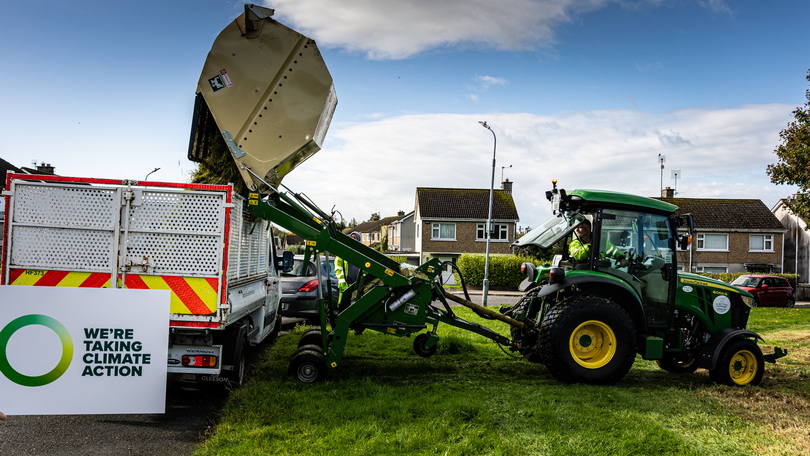
Following the success of the lease programme, Limerick City and County Council intends to explore the purchase of a similar machine as part of its long-term approach to sustainable grassland management, biodiversity enhancement and climate action.
The successful trial has shown that this technology can deliver multiple benefits for nature, climate and the public realm. It provides a practical solution for managing meadows in a way that supports wildflowers, pollinators and carbon storage, while also improving operational efficiency.
Limerick City and County Council will continue to monitor sites managed under the programme.
This project was funded under the Decarbonisation Zone Demonstration Fund from the Department of Climate, Energy and the Environment.